💔 Through the Hijab: Healing Religious Trauma in the Lives of Muslim Girls
We speak endlessly about the struggles of Muslim women — their rights, their choices, their voices. But the stories of Muslim girls, ages 7 to 18, are often left untold. It’s as if they live behind a second veil — not of fabric, but of silence.
Growing up is hard enough. Growing up as a Muslim girl in an environment that demands strict conformity can feel like living under a microscope, every action weighed against the honor of the family, the image of the whole religion, and the fear of eternal punishment.
I’ve worked closely with Arab girls in the Middle East, Muslim teens in the West, and I’ve raised two Muslim daughters myself. I’ve seen firsthand how religious structures meant to guide can instead wound. I remember how my daughters struggled to follow the strict rules of hijab at the age of 7 and 8, negotiating long garments amid childhood play. The pressure to be “a good girl” often hides deep questions about love, identity, and autonomy — questions too dangerous to ask out loud.
🌍 Navigating Girlhood
Whether in the West or the Middle East, Muslim girls often struggle with identity issues that go beyond the typical teenage angst. They constantly weigh their decisions:
If I wear certain clothes, am I being immodest?
If I talk to a boy, am I disobeying my family or my faith?
If I’m found out, will I be punished — or will my family be ashamed?
These are not questions of simple rebellion. They are about survival. Fear of being labeled, of being found out, of bringing shame to one’s family — it all adds up to a kind of quiet trauma that can follow them into adulthood.
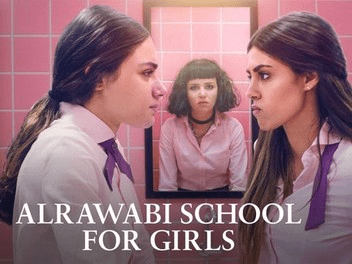
Recently, my daughter invited me to watch a teen soap opera, AlRawabi School for Girls — a Middle Eastern drama on Netflix set in Jordan. It hit close to home.
The show explores the secret lives of Arab girls at a private school — sneaking around for online romances, dealing with bullying, trying to navigate between traditional expectations and modern desires. One girl, Leanne, is under tight control from her brothers and father, but finds ways to rebel quietly. Watching this, I realized: this isn’t just drama. This is real life for many.
After Mariam is brutally bullied by Leanne and her friends, she plans revenge. However, her actions have unexpected consequences. The show reflects themes that are not commonly discussed: toxic patriarchy, bullying, mental health issues, religion and reputation, and the tradition of honor killings.
My two daughters spent half their childhood in the Middle East. They both know all too well what happens when girls are too controlled and suppressed. Though Leanne is presented as the villain of the story, she was just a girl, trying to prove her worthiness and curious about love.
The story, unfortunately, has a terrible ending for her.
🧩 Teenage Marriage and Complex Trauma
Here’s where it gets deeper — and darker. In the Salafi Islamic community, which I was once part of, the emphasis on marrying girls off early leads to a different kind of trauma.
I remember when I worked in the Islamic school, a mother pulled me aside to seek advice about her daughter, who had just turned 11.
“I see how she watches music videos and how she moves her body. She is acting like she’s ready to have sex.”
“Oh no, she’s much too young to really want to do it,” I reassured her. “She just needs more attention and more constructive activities.”
I told her about the Saudi girls I used to teach back in Madinah — how many came to the English institute just to get away from home. The virgins had a little freedom: malls, shopping with friends. But two of my young students had been divorcees; the grip on them was extremely tight.
“Because,” I explained to her, “after the girl has sex, she may desire it more afterwards… and if she ends up divorced, what will you do with an 11-year-old divorcee?”
My coworker sat back thoughtfully, then became resolute again.
“No, I have to protect her from fornication.”
I knew what that meant.
Only three months later, I had just had my baby, and I saw my coworker at a community event. After fussing over the baby, she introduced me to a veiled, smiling lady.
“This is Umm Muneeb. Her son has just proposed to my daughter.”
I tried not to look shocked as my heart pounded. They both smiled at each other with pride. I wanted to scream. I wanted to shake them both.
But my lips stayed shut as I heard the voice of “Elder Noble Brother” in my head:
“Let no one speak against the sunnah! It is a protection.”
Months later, Umm Muneeb was at my dining table. She stayed behind after Arabic class and told me the horrors her 15-year-old son faced when he discovered his wife was only 11. My coworker had lied and said she was 13. A divorce was arranged.
And it didn’t stop there.
After we moved back to the Middle East, we would make summer visits back to our community. I would see familiar faces at Eid gatherings in the park. Invited to barbeque burgers and blankets in the grass, I listened to more stories of teen marriages gone wrong. Boys and girls I had watched grow up had multiple divorces by age 17.
That broke my heart. It still saddens me.
💡 Healing is Possible — And You’re Not Alone
For every story like Leanne’s, and for every real-life girl whose voice has been silenced, there are countless others quietly enduring in the shadows. Some will never speak about the pressure, the shame, or the choices they never got to make. Others will find the courage to break free — and when they do, they need a safe place to land.
We can’t rewrite the past for these girls, but we can help write a different future. That begins with listening, believing their stories, and yes…even challenging harmful traditions — no matter how “normal” they have been made to seem.
To the Muslim girls who have been told they are too much, too curious, too emotional, too disobedient — know this: you are not too much. You are exactly enough. Your life, your voice, and your heart matter more than anyone’s reputation.
Healing from religious trauma isn’t a straight road, but it’s a journey worth taking. And the more we walk it together, the more light we can pour into the dark corners where silence has reigned for too long.
I, myself, was silent for too long.
If you see yourself in these words, or know someone who might, I invite you to join me for my upcoming workshop, Healing from Religious Trauma, here at Nela’s Nest. Because your story is worth telling — and your healing is worth fighting for. The link to the form is below.
 Nela's Nest
An hour or so after producing this piece, it hit me very hard. I actually had to check in with a counselor. I thought about that girl and boy who both should be their 30’s now. It dawned on me that I could have reported this to DHS. Though this was 15 years ago, it was heavy on me today. I pray that God’s peace descend on both the families, that they are healed of the pain of these incidents.
LikeLike