a book excerpt: Veiled & Redeemed
Mothers mold us—not only in the womb but also through every interaction we have with them. British psychoanalyst Donald Winnicott once said, “There is no such thing as an infant—only an infant and their mother.” Our sense of self, he believed, is built from the earliest relationship with our caregiver.
But what happens if your own mother wasn’t there for you emotionally?
That’s where my story begins.
Over the last thirty years, I’ve had two mothers-in-law from two different marriages over a 24 year span. I call the first Mimi and the second Chi-Chi. They were very different women, rooted in very different worlds. Yet both of them mothered me in ways that shaped my journey of healing.
Mimi: The Initiator
Mimi lived through the Nation of Islam’s “First Resurrection”—the era when the Honorable Elijah Muhammad was alive and the community flourished. She shared many stories with me of how hggthe teachings of the Messenger and the structure of the organization had transformed countless Black lives both socially, spiritually, and economically.
When he passed, the Nation splintered. Lands and businesses were lost, lawsuits unfolded, and spiritual confusion spread as his son, Imam W.D. Mohammed, guided many into orthodox Sunni Islam. This history is often glossed over in popular culture, even in the Malcolm X movie.
Mimi lived through that turbulence. She carried that history in her bones. Being around her was like touching a piece of living history. Though she did embrace orthodox Islam, she deeply believed that the work of the Nation gave Black people a critical sense of discipline, structure, and identity.
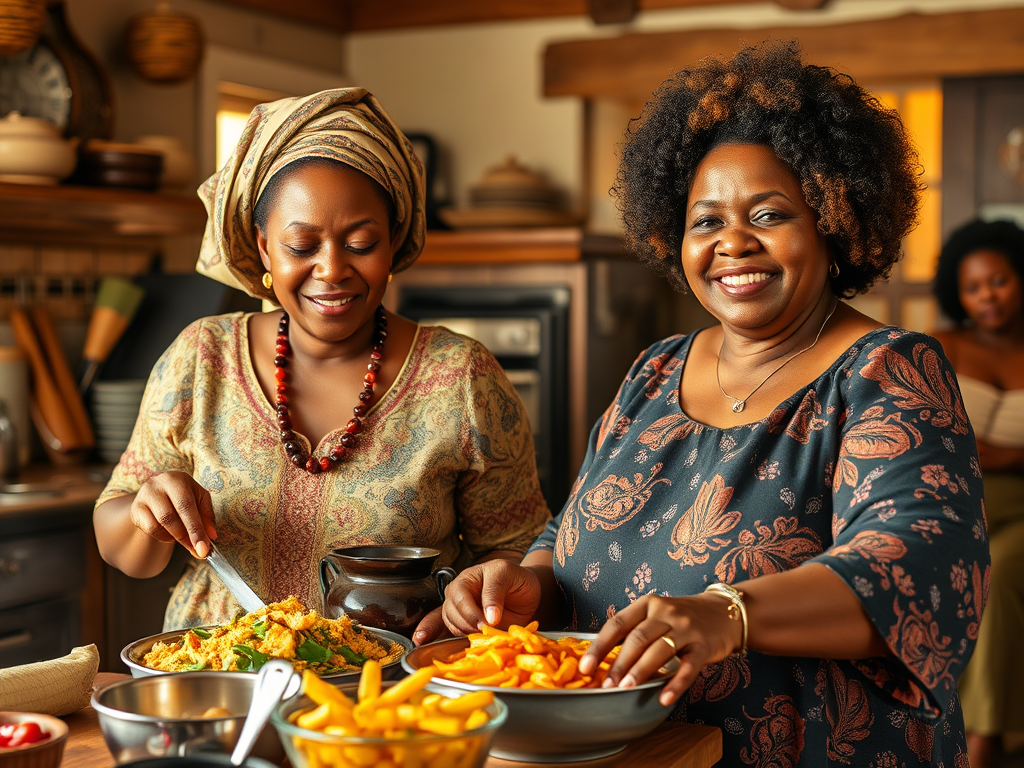
Mimi initiated me into Islamic culture. She taught me to remove my shoes when entering a home, bathroom manners, modest dress, and food practices that blended Elijah Muhammad’s Eat to Live philosophy with Hebrew Israelite cooking traditions. Mimi taught me to make things like “wheat meat” and “righteous sweet potatoes”. She could take a bag of flour and a can of beans and make a whole meal.
Her kitchen became a classroom. To this day, I eat brown rice, grainy bread, take supplements, and I’m an avid water connoisseur—all habits I first learned from Mimi. She taught me that my relationship with food could be a spiritual discipline.
Chi-Chi: The Medicine Woman
Born in the deep South, Chi-chi’s parents had migrated north in the 60’s for work. She grew up in a small house with ten siblings, where survival meant learning to stick together. From her, I learned that a fight didn’t mean a cutoff—it simply meant you knew someone more deeply.
That was a revelation for me. I had grown up afraid of conflict, keeping the peace at all costs, or else withdrawing into silence. Chi-Chi, however, believed family was forever. Even her mother, Gigi, once told me: “If you and Jawad ever get divorced, I’m still Grandma.” That was their ethic: you don’t abandon each other; you work it out and stick together.
Chi-chi had embraced after the split, following Imam W.D. Mohammed and Sunni Islam. Her home embodied that same spirit. Hidden beyond the living room, she had a dedicated prayer room, something I had never seen before. It was a space of plush carpet, shelves lined with religious books, and a quiet that radiated peace. The tranquility from that space spilled into the rest of the home, even when family life around us was chaotic.
There was an uncle that used to visit Chi-chi’s house often. We would know his presence because of his gruff voice. “Hey, how y’all doin?'” he would ask as he walked in the side door. He and Chi-chi would talk about Madea, their grandmother down south, her farm, the animals, the smokehouse, and the tradition of tending to the Earth. It was more than just nostalgia; they were preserving an oral history. She grew herbs and vegetables in her backyard, blending practicality with spirituality.
Two Mothers, One Lesson
Though Mimi and Chi-Chi stood on different sides of history and faith, both nurtured me. Mimi offered discipline, cultural initiation, and spiritual structure. Chi-Chi offered resilience and rootedness in family and earth.
But here is the deeper truth: as much as they gave me, I ultimately had to learn to mother myself. Instead of numbing my wounds or sinking into self-pity, I had to learn to comfort and nurture my own inner child.
That is the journey from being veiled in wounds to being redeemed in self-love.
Until next time….peace, shalom and salam,
Nela
 Nela's Nest
Leave a comment