🌿 4: Why Nela’s Nest Exists — The Layered Trauma: Childhood Wounds, Female Socialization, and Doctrines That Silenced Me

An introductory reflection on how being born female, childhood trauma, and religious texts shaped my voice—and my silence.

When I began healing, I realized something I had never been able to name before:

**My pain did not start with religion—

but certain doctrines interacted with my childhood wounds in ways that kept me silent, afraid, and compliant.**

And I want to say this clearly, academically, and without hostility:

There is a collective trauma carried by many women—not because of isolated experiences, but because of being born female within systems shaped by certain religious doctrines.

This isn’t about attacking a religion.
This is about acknowledging the psychological environment created for women by specific teachings many of us were raised on.


🌱 The Collective Trauma of Being Born Female (Within Islamic Doctrine)

Across the Qur’an, Hadith, and classical commentary, there are recurring themes regarding women that form an emotional landscape many females must navigate. Academically, these include:

  • the expectation of female obedience
  • the normalization of polygamy
  • the silence surrounding child marriage
  • the prioritization of male authority (spiritually, socially, and legally)
  • the association of female value with purity, modesty, and virginity
  • the concept of divine punishment for women who assert boundaries or express anger

These teachings collectively form a psychological environment—an environment where many women learn to silence themselves, excuse harmful behavior, internalize fear, and accept emotional neglect as “faith.”

This is not about blaming individuals.
It is about acknowledging the effects of a doctrine when combined with real human vulnerability.


🌑 How Childhood Trauma Intersected With These Teachings

Because of my unresolved childhood trauma, I was already conditioned to:

  • avoid conflict
  • people-please
  • stay quiet
  • fear abandonment
  • accept mistreatment
  • distrust my own instincts

So when I entered a religious system where:

  • obedience was spiritualized
  • silence was idealized
  • male authority was normalized
  • polygamy was always a possibility
  • women were inherently secondary in the moral hierarchy

…it all felt familiar.

It felt like home—not because it was healthy, but because trauma recognizes trauma.


📚 The Doctrines That Kept Me Silent

There were specific teachings that shaped my voice—and my inability to use it.

For example:

“The righteous women are devoutly obedient…”

(Qur’an 4:34)

I taught this verse.
I instructed women to be patient, submissive, compliant.
I told them to endure emotional hardship “for the sake of God.”

And here is the truth:

I helped normalize emotional and spiritual abuse—because I believed God required it.

That is something I had to grieve deeply.
And something only Jesus has been able to free me from in forgiveness.


⚠️ The Things No One Talks About

There are topics Muslim women whisper about privately but rarely acknowledge publicly, including:

Child marriage

Aisha’s young age is well-documented in major Hadith collections.
Women avoid this topic because it is painful, confusing, and uncomfortable.
Silence becomes the only safe response.

The Prophet’s 11 wives

Even though the Qur’an limits men to four wives, classical biography records the Prophet exceeded this limit.
Women are forbidden from questioning this discrepancy.
Again—silence becomes survival.

These issues do not just exist in books.
They shape how women feel about themselves, their bodies, their worth, their roles, and their right to question harm.


🧩 The Layering of Pain

By the time my faith crisis arrived in 2019, I could finally articulate something I had felt for years:

**My childhood trauma made me vulnerable.

These doctrines deepened the wound.
Together, they created a layered trauma I did not have words for.**

This blog is not an attack on Islam.
It is a place where many women will finally see their own pain reflected—and understood.


🌸 And Now… Healing

Healing for me meant asking questions I had been too afraid to ask.
It meant recognizing that spiritual truth cannot grow where fear is the foundation.
It meant understanding that God is not the author of my trauma.
And it meant forgiving myself for the years I taught women to carry burdens they were never meant to bear.


🌿3: Why Nela’s Nest Exists — Deconstructing Islam: Permission to Question

The Three-Year Journey That Broke Me, Freed Me, and Rebuilt Me

When my emotional and spiritual worlds collapsed, I found myself staring at a terrifying truth:
I had lived 25 years inside a belief system I had never truly questioned.

I had been taught that doubt was dangerous, that curiosity was rebellion, and that silence was obedience. For decades, I accepted doctrines that shaped every part of my life—how I prayed, how I dressed, how I thought, how I understood God, and even how I viewed myself.

But when the crisis finally stripped away the layers, there was only one thing left:

❗ A question I had never allowed myself to ask:

“What if everything I believe… needs to be examined?”

That question changed everything.


🌫️ The Forbidden Curiosity

For most of my life, curiosity was discouraged.
Questions were labeled as weakness.
Doubt was framed as betrayal.
Critical thinking was considered a spiritual threat.

So when I finally gave myself permission to question, it felt like stepping into forbidden territory.

I was terrified.

Terrified of being wrong.
Terrified of divine punishment.
Terrified of losing the identity I had poured my whole life into.
Terrified of the truth — whatever it might be.

But I was also exhausted from pretending.

And so, slowly, painfully, courageously… I started asking.

I asked the questions I had swallowed for years.
I examined doctrines I had accepted without understanding.
I challenged teachings that had shaped my fear, shame, and sense of unworthiness.

🌱 Curiosity became my first act of self-love.


🕊️ The Painful Discoveries

As I questioned, layers began to peel away.

Some answers devastated me.
Others liberated me.
Some broke my heart.
Some healed parts of me I didn’t even know were hurting.

I realized that many of the beliefs that controlled me were rooted not in spiritual truth, but in cultural pressure, patriarchal structures, fear-based theology, and unexamined tradition.

And with every truth uncovered, I felt myself both breaking and becoming whole.


🌑 The Three-Year Descent

This deconstruction wasn’t quick.
It wasn’t clean.
It wasn’t gentle.

It took three years of wrestling with grief, confusion, betrayal, and disorientation.
Three years of crying over lost certainty.
Three years of mourning the identity I once wore proudly.
Three years of rebuilding trust in God—not the God I had been taught to fear, but the God I was slowly learning to love.

The process was satisfying yet excruciating.
Liberating yet disorienting.
Empowering yet deeply lonely.

And the grief?
The grief was unlike anything I’d ever felt.
I grieved the faith I loved.
I grieved the version of myself who once believed wholeheartedly.
I grieved the dreams I had built around that belief system.
I grieved the sense of belonging I once had.

It was a grief I would not wish on my worst enemy.


🌿 The Turning Point

But somewhere in the middle of all that pain, something beautiful began to happen.

I started finding my voice.
I started hearing my intuition.
I started seeing myself outside of religious identity.
I started meeting God in ways I never had before—
not through fear, but through presence.
Not through ritual, but through honesty.
Not through submission, but through relationship.

And this is why Deconstructing Islam became the first category on my blog:

🌱 Because this was the first step in my healing.

🌱 Because this was where I learned to think, feel, and trust again.

🌱 Because this is the doorway many others will walk through, too.


Next in the Series:

Post #4 — “The Hidden Root: How Childhood Trauma Shaped My Spiritual Life”

This next post will uncover the unexpected truth you discovered—that your spiritual trauma did not begin with Islam. It began in childhood.

Good morning Message,

Time to pull out your journal…

Good morning.

This is Nela. I’m so glad you decided to join me on Nela’s Nest dot blog. I want to ask you a question. If you’re here and you’re searching, if you’re searching for answers, if you’re searching for peace, if you’re searching for clarity after confusion. (0:33) When I see this question, are you carrying guilt and shame? You know, I spoke with a woman from a global organization. She works with ex-Muslims from all around the world, from Iran, Iraq, Afghanistan, Saudi Arabia, Egypt.   I myself have listened to ex-Muslim stories from, you know, U.S. other places. And there’s one thing that keeps coming up in these conversations. And that is guilt and shame. (1:16) Guilt says that I have done something wrong. Shame says that I am something wrong. Both of these are very toxic to our spiritual and emotional health. Now, what happens to a lot of Muslims while they may have good intentions in trying their best to practice the religion of Islam? (1:45) They find that they don’t meet the mark. And not meeting the mark might be, you know, missing prayers or missing fast, for example, or not wearing hijab or maybe falling into something that is considered forbidden.(2:09) Whatever the case may be, what happens, the cycle of the guilt and shame is that the person feels guilty for not doing or for doing wrong. (2:24) That’s number one. Then number two, they have to conceal it.They can’t share it with their friend that, you know what? I don’t want to fast Ramadan tomorrow. I don’t feel like fasting. (2:38) Or can I just fast, you know, a week out of Ramadan or do I have to do the whole 30 days? Or, you know what, I never made up my fast.  I’m so bad. I’m such a bad Muslim, such a bad person. There’s something wrong with me. So I can easily go from guilt straight to shame by first convicting myself for not doing. (3:05) And then proclaiming that inside of myself, and all this is going on inside of my own heart and my own mind, proclaiming that there’s something wrong with me. (3:17) And that’s the shame.And then the longer I keep it secret and try to cover it up, like a lot of Muslim youth are doing, the deeper the guilt and the shame becomes. (3:38) And now the tragedy of that is that my perception of what God thinks of me is all distorted. There are Muslims who think that God doesn’t love them.(3:58) God has cursed them. God is punishing them. They don’t know if God forgives them.And this is very, very trying on a human soul. (4:15) And so this space here is meant to be a space of healing. And so in a space of healing, there are certain things that have to be rooted out, certain things that cannot be present.(4:32) One of them is guilt. Another one is shame. Another one is blame.. So how do you feel about your relationship with God? (4:48) Do you feel that you are valuable to him? Do you feel that he loves you? Do you feel that you are loved? Do you feel that you are supported? (4:56) Do you believe that you’re worthy of God’s love? What are your thoughts, feelings around your relationship with God? (5:11) So I want to challenge you this morning. If you’re willing, if you are willing to journal and write down, really what’s in your mind, really what’s in your heart. (5:27) Because I can almost guarantee you, someone else feels the same way. Sometimes we feel like we’re alone. Like I’m the only one who feels like this. (5:39) I’m the only one who’s struggling with this. But that’s a trick of the enemy to keep you isolated. And the more isolated you feel, the longer it might take for you to heal. (6:00) So this was just a short message this morning.I hope this will benefit you. And pretty soon I will hold a very confidential private Zoom meeting for us to get together. (6:16) And discuss these things.

Take care. Peace.

Nela

I Have Heard Your Reactions

Dear Friends,

Good evening. This is Nela.

I want to acknowledge that my recent interview has been both shocking and deeply painful for many Muslims who knew me. I’ve heard your feedback, and I want you to know that I receive it with humility.

What I shared came from a place of deep personal struggle—a crisis of faith that was agonizing and transformative. It’s an excruciating grief I would not wish on anyone. The joy I expressed was not aimed at mocking Muslims, but at celebrating the freedom I’ve found after years of spiritual confusion. Only a few months ago, I could not have spoken about these things without bitter tears.

I wish I could have spared you the hurt of hearing the news. But you should know that my faith transition has happened over the course of 3 years. and no one is more shocked about it than me. I did not ask for this or plan it. I’m still fascinated and astonished at this whole spiritual journey myself.

Though I consistently participate in healing work, I will own that there are areas of my spirit where I am still releasing anger and disillusionment. There may be moments when these residual emotions leak out, masked by sarcasm.

And I take full accountability for what I say and how I say it.

I understand that Muslims are listening, and intend to be mindful of how I speak moving forward.

This is my story—my truth. My goal is never to cause harm, but to bear witness to the journey God is guiding me through.

My platform, Nela’s Nest, is a space carefully created for women of all faiths. This is not meant to be a forum for argument or hostile debate though thoughtful and healthy discourse is welcome. Our ultimate mission is clear: to assist women in the deep and sacred work of healing and recovery from emotional and spiritual trauma.

The topic; Perspectives on Islam is only a pretense for my platform — the gateway into my own journey of healing. It was through this deeply personal process of examining Islam, allowing myself to ask questions and face my doubts, that my eyes were opened.

I will share what God has revealed to me through His Living Word — about Islam and the Abrahamic faiths more broadly. Once all questions, doubts, and insights have found their voice — we will move into a powerful spiritual transition: rebuking falsehood and replacing it with truth.

After this foundational work is complete, we can then fully engage with the heart of this platform:
Healing and Recovery from Trauma — A Wise Woman’s Toolbox.

Thank you to everyone who has reached out, challenged me, or simply listened.

With respect and sincerity,
Nela

formerly known as ‘Nadiya’

Islam to Christianity: Isn’t That Going Backwards?

No! Islam went back to the Law of Moses

(read until the end)

One of my Muslim friends said to me, “That’s going backwards.” And 4 years earlier, I would have said the same. But currently, while studying the Gospel of John, I am seeing this from a much different perspective. I am seeing how Islam actually took us back to the Mosaic Law, which was so impossible to fulfill:

Commands Difficult to Fulfill

For a practicing Muslim, prayer is 5 times a day. In preparation for prayer there are conditions to be fulfilled:

  • Ablution/washing
  • The prayer’s time must be in
  • A clean place
  • Clean clothing
  • Facing Mecca

So, let us say I have just washed perfectly, dressed, placed my mat facing Mecca, no dog hair or saliva has touched the area. Now, I am ready to pray but I pass gas, i.e. fart. Passing gas negates the ablution and I must do it all again.

In the month of Ramadan, the month of fasting, the fast begins at the break of dawn and ends at sunset. A woman could have fasted the entire day, but if her menstruation comes an hour before sunset, she must fast the entire day again. It will not ‘count’.

If one breaks their fast without an excuse there is also a severe punishment. I remember in Madinah, I was in the car with my 1st husband and one of his fellow students of knowledge. It was so weird, in Madinah when our husbands stayed out late, they were not at clubs or bars meeting women – they were with Sheikhs learning the religion. Anyway, a man had come to a big Sheikh and asked: ” Sheikh, my wife and I got married during Ramadan (why would they do that?) and we broke our fast every day for 12 days. (i.e. they had intimate relations).” The Sheikh answered his question this way: “For EACH of the 12 days, you owe 30 more. AND if your wife had sex with you willingly, then she owes the same.” I remember my mouth dropping open underneath my veil. “Damn!” I thought. I had read about the ‘kafara’ but reading about it was one thing. This is what I mean by commandments/laws that are difficult to fulfill. This was the situation of the Pharisees that Jesus encountered.

Dietary Laws

The dietary laws of Islam are also similar to that of the Jewish law.

 "He has only forbidden to you dead animals, blood, the flesh of swine, and that which has been dedicated to other than Allah..."

Al-Baqarah (2:173

I remember visiting my grandmother when she was alive, and being particular about the dishes and pots which had been used for pork. My grandmother said, ‘Oh you all are like the Jews.’ I was completely offended. (see the article Spiritual Hatred of Jews.)

Other than pork, there are other animals forbidden to eat in Islam. Predatory animals, animals which live in and out of water, scavenger animals such as crabs, and predatory animals having fangs or talons.

Lambs to Slaughter

First, in chapter 1, John the Baptist introduces Jesus by saying, “Behold the Lamb of God”. The Jews understood the significance of the lamb, an animal of sacrifice. The Muslims understand it too. When a Muslim couple marry, they slaughter a lamb called a Waleemah, and invite family and friends to eat the meat and share in the occasion. When that couple has a child, again they slaughter; 1 lamb for a girl and 2 for a boy. This is called Aqeeqah. They then share the meat with family and friends. When Muslims travel to Mecca for Hajj, pilgrimage, they are also obligated to slaughter either a lamb or another particular animal. I know this all too well! When my 1st husband and I made Hajj, we could not afford to slaughter, so we were obligated to fast for 10 days. During the Eid of sacrifice, those Muslims who did not travel to Mecca, are also encouraged to sacrifice/slaughter a lamb or similar animal in remembrance and celebration.

Threats & Harsh Punishments

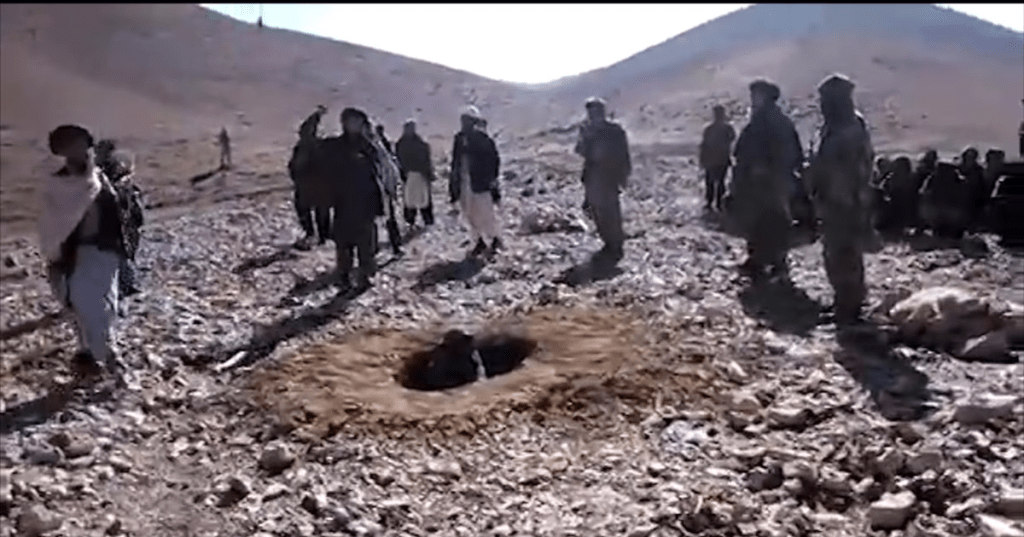
Reading Chapter 8 was something i did not expect. the pharisees bring before Jesus, a woman who was ‘caught in adultery’. The Mosaic Law said to stone her to death, but Jesus showed them a new perspective. Let he who is without sin throw the first stone!

Indeed, the Islamic Sharia punishment is stoning to death of the adulterer, though this is not practiced in most places today.

This still image from a horrifying video, shows a woman accused of adultery, down in a hole being pounded in the head with large stones in Afghanistan. This was in the year 2020!! (I do not advise watching the video.) In authentic Prophetic hadith;

(Muhamad) Allah’s Messenger (ﷺ) awarded the punishment of stoning to death (to the married adulterer and adulteress) and, after him, we also awarded the punishment of stoning, I am afraid that with the lapse of time, the people (may forget it) and may say: We do not find the punishment of stoning in the Book of Allah, and thus go astray by abandoning this duty prescribed by Allah. Stoning is a duty laid down in Allah’s Book for married men and women who commit adultery when proof is established, or if there is pregnancy, or a confession.

Sahih Muslim 1691a; Book 29, Hadith 21

It is understandable now why the Quran negates the crucifixion and the resurrection! Without them, we WOULD still be trying to fulfill the Laws of Moses.

Between Guilt and Arrogance

Jesus told the Pharisees that they knew the Law but they did not know God. Their hearts were dead.I was similar to them. Myself and my friends were so high on our horses. We were better and smarter than Jews, Christians, and even other Muslims. We knew the Law.

In the shadows of this arrogance, was shame and guilt. In Islam, When one truly humbled their heart to Allah, they found guilt, shame, or fear. If I missed a prayer and didn’t make it up, there was guilt. If I didn’t make up fasts or got weak during a fast and broke it, there was guilt. Wondering if I was ever forgiven or if my deeds were ‘accepted’. After prayers and at the end of Ramadan, Muslims say to each other, ‘may Allah accept it from us.‘ I never knew if I was good enough or if I was forgiven. And I always thought it was just me until later when I met so many others who had experienced the same thing.

Later on, I would like to discuss atonement and the idea of redemption and the difference in views between the religions. This is enough for now.

Nela

Our Mission here: The Good Work

Healing and Recovery from Trauma, The Good Work

Peace and Welcome!

My name is Nela and I am here to share not only my personal experience but the tools of healing from trauma.

It’s great that therapy has become less taboo in our society and I believe therapy is a good beginning on the road to healing (for many people). However, people have to realize that clinical therapy only represents about 25% of the healing process. Therapy is a beginning, an opening. A clinical professional has a trained ear and can help us to pinpoint damaging beliefs and/or give relevant diagnosis. This is important and has its place. However, one may sit with a therapist for just 2 hours a month. If you have worked with a therapist, you know that it can take time to open up and trust this other human to whom you are telling your story. Even after we hear a diagnosis, we might think, ‘great, now I know what’s wrong with me.’ But knowledge and understanding of our condition DOES NOT CHANGE US. In many spaces over the internet, people are DESCRIBING emotional and relationship issues, but resolving our issues is entirely different. We must have the tools of transformation.

The Good Work

So, I wish to present here and on my You Tube channel what we shall call, The Good Work. Made up of an array of healing modalities, The Good Work is what we have the power to do on behalf of our own healing process.

The process of healing and recovering from childhood trauma, spiritual abuse, or any other kind of painful event has been a topic of passionate personal study for me since I experienced an emotional breakdown in 2017.

  1. Breathwork: Recently, I started taking an African dance class, which is a very exhilarating full body cardio workout. I was surprised to feel that my breathing was very steady during the whole workout while other ladies were out of breath. But breathwork is for more than a physical benefit. It calms the nervous system and nurtures an emotion that trauma survivors savor: the feeling of safety.
  2. Meditation; ‘Be still and know that I am God.’ When recovering from traumas we want to begin to choose better responses to the world around us. Instead of ‘being triggered’ or ‘snapping’ in a stressful situation, stillness helps us regulate our responses and develop greater emotional stability. 
  3. Sacred Reading and Prayer; Study of the Bible or other writings that speak to the needs of the spirit give us hope and help us to see beyond what is in front of us.
  4. Journaling; We begin to observe our own thoughts, feelings, reactions, and behaviors not to judge ourselves, but to recognize areas where we can heal and grow.
  5. Declarations are statements we make with authority and clarity. These faith-filled statements empower us to live according to God’s will, confronting life’s challenges with the whole armor of His truth. When you declare you are aligning your words with God’s Word, and that alignment brings about transformation.
  6. ‘Walk in Truth‘: Walk in that truth, move in that truth, whether it be by actual walking, dance or exercise. Have you ever listened to music during a cardio workout and hours later still had that song in your head? This is the affect we are creating when we move in our declarations.
  7. High-minded Talk; using our words to regulate our emotions is a skill that aids in our healing. For ‘… what comes out of the mouth proceeds from the heart…’ So, as we cleanse our hearts of the old hurts, we change our words to maintain our new emotional state.

Heal Yourself & Your Household

When you understand each modality in the ‘toolbox’, you can begin to write your own prescription for yourself and your household to heal what is emotionally or spiritually ailing you. We have to realize that the emotions are in our bodies and this Good Work is mostly internal. It may seem unimportant but I assure you each one of these modalities IS significant and all of them firing at once has saved me from the misery of low self-esteem, which led to me joining an extreme religion.

Emotional and spiritual healing can be an entire journey. Remember, you are not just healing for you, you are healing for everyone and everything connected to you. All your relationships will transform for the better when you feel better from the inside out. I hope this information will serve you at the highest level.

Nela

Adaptive Advantage

Welcome to WordPress! This is a sample post. Edit or delete it to take the first step in your blogging journey. To add more content here, click the small plus icon at the top left corner. There, you will find an existing selection of WordPress blocks and patterns, something to suit your every need for content creation. And don’t forget to check out the List View: click the icon a few spots to the right of the plus icon and you’ll get a tidy, easy-to-view list of the blocks and patterns in your post.

Blog at WordPress.com.

Up ↑