🌿 Three Essential Things to Do When Beginning Your Spiritual and Emotional Healing Journey

🌿 Finding Your Way Back to You: A Gentle Beginning with Handpan Music by Malte Marten

Welcome, Precious One.

If you’ve found yourself here, maybe something inside is stirring—calling you toward healing, toward peace, or just toward something more. Whether you’re just beginning to explore your spiritual path, tending to emotional wounds, or simply trying to reconnect with your inner self, know this: you are not alone, and you are right on time.

This journey is not about fixing what’s broken—it’s about returning to your wholeness, slowly and gently.

“He restoreth my soul: he leadeth me in the paths of righteousness for his name’s sake.”
Psalm 23:3 (KJV)

Where is your soul being invited to rest and restore today?

Here are three powerful and loving steps to help ground you as you begin this sacred work.

🌸 Three Things to Do When You’re Just Beginning

If you are beginning your own journey of healing—emotionally, spiritually, or both—here are three powerful steps to ground your process:

1. Practice Breathwork

Breath is our anchor. It’s the gateway to slowing down, feeling our body, and reconnecting with ourselves.

Many of us live in survival mode—tense shoulders, clenched jaws, stiff backs, or even clenched buttocks (yes, I discovered that too!). These are signs of fight, flight, or freeze responses from past trauma.

Breathwork helps dismantle these walls gently. Start with noticing your breath. Lengthen your exhale. Breathe into the tight places. And most importantly, feel what it’s like to simply be in your body.

Thare are coaches on You Tube who can guide you in various breathing practices. If you would like to explore this deeper with me, I will be hosting a workshop very soon here at Nela’s Nest.

2. Build a Circle of SupportHealing is not meant to be done alone.

Surround yourself with 2 or even 3 trusted, safe people—friends, mentors, family—who will hold space for you. These are the folks who give the best hugs, who will sit with you over a cup of tea, and who can simply be present without judgment.

Let them know you’re beginning a healing journey. You may include a clinical therapist in your journey. Having someone with a clinical background to listen and help you identify, or even diagnose things that may be going on inside of you. Whether or not you include a therapist or coach is up to you,—but never underestimate the power of gentle, consistent support.

3. Give Yourself Grace

This may be the hardest and most important step: be kind to yourself.

Painful memories may surface. You might wonder why you tolerated certain things. You may feel guilt or shame.

But here’s what I want you to remember:

  • Guilt says: I did something wrong.
  • Shame says: I am something wrong.

Neither defines who you truly are.

Give yourself grace. Talk to yourself kindly. Hug yourself. Look in the mirror and say, “I love you.” Or if that’s too hard, just point to your reflection and say, “You are loved. You are supported. You are worthy.”

This is a lifelong journey. It’s not linear. But every breath, every prayer, every moment of grace is a step forward.

From my heart to yours—thank you for flying into Nella’s Nest today.

Peace. Shalom. Salaam.
— Nela 🌿

Parenting, Confidence, and Spiritual Growth

A Morning Walk in Soloman’s Wisdom

This morning, my daughter started her first real job. Not just a part-time gig or something casual—her first truly “adult” job. A sales position uptown where she said she could make as much money as she wants… kind of.

As a mom, I felt a wave of pride—and also a tug of nervousness. I know sales demands confidence. I also know how delicate that confidence can be, especially if it’s been undermined in subtle ways by the kind of parenting I once practiced. Parenting shaped by fear. By rules. By the pressure of a strict religious environment.

So I offered a small gesture of support:
“Let me walk you to the bus station.”

It’s only a five-minute walk. But to me, it felt like a quiet chance to uplift her—and, if I’m honest, to gently undo some of the damage I may have caused over the years.

She agreed. I said, “We can walk and talk. I want to share something Solomon once said.”

She glanced at me sideways, suspicious.. “Mom… is this from the Bible?”

“Yes,” I smiled. “But you know Sulaiman,” I added in Arabic, hoping it might sound more familiar, more approachable. “He was a powerful prophet and king!”

We started walking. Well—she started walking. At nineteen, her legs are long and fast. Mine, not so much. I was falling behind, breathless.

She glanced back, called out, “Gotta go! There’s the bus!”

My shoulders drooped. I had missed my moment.

But just as she stepped onto the bus, she turned and shouted over her shoulder:

“Text me what Solomon said!”

Something about that moment felt like an opening.
Not because I’m trying to change her—her spiritual journey will unfold in its own time when the season is right. But I want her to have full access to the richness of God’s Word and the spiritual abundance that’s already meant for her.

Soloman’s words?

“Above all else, guard your heart, for everything you do flows from it.”
(Proverbs 4:23)

A seed planted.
A step toward healing.
For both of us.

💬 Have you had a moment like this—where a small exchange held deep healing?

I’d love to hear from you. Drop a comment below, or share this post with someone who’s healing from faith, parenting, or spiritual wounds.

Let’s keep these conversations going—because healing grows stronger when it’s shared.

🕊️ With love and light,
Nela

Nelajaye@gmail.com

Healing Through Healthy Masculinity: A Correctional Experience

(music by Malte Marten, Handpan music)

What does that mean? It means intentionally re-entering spaces or dynamics that once hurt me—but this time, with new tools, insight, and boundaries. The goal is to rewire the way my body and mind respond. I don’t just relive the experience—I redo it with wisdom and strength.

For me, a big part of that correctional work has been learning to engage with men again—safely, selectively, and intentionally.

From Wounds to Wisdom

I converted to Islam at 22, but my trauma started long before that— And unfortunately, my experience in Islamic marriage did not heal that—it deepened the trauma. I wasn’t nurtured, seen, or emotionally safe. I was ordered, shamed, and then abandoned,

I have had to relearn what it means to be in the presence of a man. Not as a wife. Not as someone bound by rules or shame or being threatened with punishments.

Prophet Muhammad said: “When a man invites his wife to his bed and she does not come, and he (the husband) spends the night being angry with her, the angels curse her until morning.” (Sahih Muslim)

and

Prophet Muhammad also said: “I was shown the Hell-fire and that the majority of its dwellers were women who were ungrateful.”

In the past, hadith like these had haunted me, deepening my shame and fueling my quest for perfectionism.

But now, showing up as a whole healed woman, I’ve been dating—and I mean truly dating. Dinners, concerts, conversations, mini-golf, walks. Not chasing marriage. Just enjoying respectful company and learning to receive healthy masculine energy.

And you know what? It’s been healing.

A Return to Self-Worth

Being treated like a queen—cherished, not merely tolerated or preached to—felt revolutionary after everything I had endured and watched my friends endure. To be taken out, cared for, and truly seen was more than just refreshing; it was healing.

Traditional dating didn’t just teach me about men—it taught me about myself. I realized how nervous I used to be, how I stumbled through conversations, unsure of how to relate to the opposite sex after years in a strictly segregated religious environment. I often said the wrong things—or shut down entirely.

But I’ve grown.

You know, knowing my value changed everything.

Once the fear dissolved… I learned to see men—differently. I no longer spoke from a place of fear or obligation, avoiding eye contact and hoping I’m doing the right thing. Instead, I now speak with ease and comfort knowing that as a woman, I am just as valuable to God as he is as a man.

And I learned to listen, not just to words, but… to a man’s heart. Men actually have hearts!

And once I could hear that… everything shifted. I began to see things—things most people miss. I could sense what weighed on him. I could tell when he was guarded… or when he was silently screaming for someone to truly see him.

Now, I can spot certain things in a man almost instantly.
And because of that… men often open up to me.
They share the quiet things. The tender things. The things they’ve never said out loud.

And when they do…
I honor them.

I don’t use a man’s vulnerability against him.
I don’t interrupt it.
I hold space for it.

Because when a man lets you see his heart,
that’s not weakness—it’s sacred.
And I treat it as such.

This, I believe, is part of becoming an emotionally healthy woman: not only knowing your worth, but also holding space for the humanity in others—without losing yourself in the process.

The Inner Work

My modesty, my etiquette, my grace—I do thank Islam for that. It taught me dignity, self-restraint, and the value of carrying oneself with purpose.

But my inner healing—my self-love, my freedom from judgment, my ability to breathe—that came from Jesus.

It was Jesus who transformed my heart. Who released me from being hardened, legalistic, and self-critical. Who took the inner struggle and replaced it with peace. And that’s a healing I could never have predicted.

Masculine Energy Without Romance

Not every healing moment involved dating. Some of the most nurturing male energy I’ve received has been in platonic spaces—like the men at church who greet me with side hugs and genuine concern, who ask how I’m doing, who offer help with no hidden motive.

It reminded me that masculine energy doesn’t always have to be romantic or sexual to be healing. Just being seen and honored by good men has been therapy for my soul.

The Formula That Changed Everything

Here’s a powerful practice I learned from my first life coach (and then saw modeled in real life):

When dating, don’t just focus on what went wrong. Look at what went right. Ask yourself:
What did I like about this person?
What quality made me feel safe, seen, or appreciated?

Then write those qualities down. Over time, you build a clear, personal picture of the kind of man you’re truly seeking—based on values, not appearances. It’s no longer “I want someone like Mike or John.” It’s “I want someone who’s emotionally available, or deeply spiritual, or adventurous.”

You strip away the face, and you focus on the substance.

Freedom at Fifty

When I left my marriage, I was told no one would want me. “You’re about to be 50. Who’s going to want you?”
But here’s the truth:
I’ve never been more wanted.
Not just physically—but spiritually, emotionally, intellectually. The right men see me. They value me. And more importantly, I value me.

I’m not who I was three or five years ago. That woman is gone. I’ve been reborn. My standards have changed, my energy has changed, my whole identity has been redefined.

Healing is an Open Door

If you’re in a religious space that doesn’t allow dating, you can still have these conversations—with brothers, cousins, uncles, fathers, or mentors. Ask the men in your life about their views on manhood, relationships, heartbreak, and healing. You might be surprised by what you learn.

Healing from trauma isn’t always about looking inward. Sometimes it’s about reaching across the line, sitting in unfamiliar company, and letting yourself be loved differently.

✨ Journaling Prompt:

What has your experience with masculine energy been like? How has it helped—or hindered—your healing? In what ways can you begin to rewrite that story today?

📖 Scripture Reflection:

“Behold, I will do a new thing; now it shall spring forth; shall ye not know it?” — Isaiah 43:19

Talk to you soon!

Peace, Shalom and Salaam

Nela

✨ When Belief Becomes a Battle: Healing from Religious Trauma

By Nela Jaye

Last night, I had the kind of conversation that stays with you. I met a woman from the Middle East—she spoke fluent Arabic, and we instantly connected at a Bible study. There’s something powerful about meeting someone who understands the layers of your story, even if you’ve only just met. As we talked, switching between English and Arabic, I saw her eyes widen at my testimony. She showed me her arms, “I have goosebumps,” she said in amazement. She wasn’t expecting it. But then again, neither was I—because even in sharing my story, I often forget just how far I’ve come.

Today, that conversation took me back—to Egypt, to Milwaukee, to street corners, train stations, and unexpected living rooms where my past collided with glimpses of another truth I wasn’t ready to receive.

Tea with Mary and Jesus in Cairo

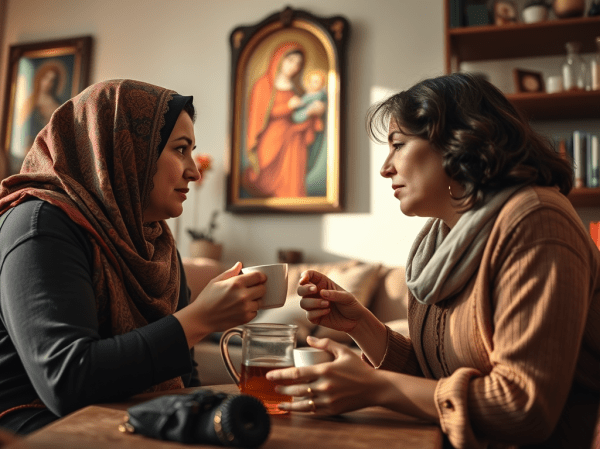
In 1997, while living in Cairo, I had one of my first real encounters with an Egyptian Christian. Dressed like everyone else—long skirt, scarf, modest top—she didn’t stand out in any religious way. Muslims and Christians dressed the same, lived side by side, and yet bore unspoken tensions from past conflicts. ,,,

We were lost, looking for an address, and she guided us through twisting backstreets like she’d known us forever. That’s how we ended up in her living room, drinking tea. That’s how I saw the portrait of Mary and baby Jesus on her wall. That was her quiet way of telling me who she was. She didn’t say it out loud at first—there was hesitation, caution. But when I told her I was from America, she relaxed. We smiled, and in that moment, it didn’t matter that we believed different things.nn

What I remember most wasn’t the theology or the doctrine—it was the tea, the warmth, the way her home opened to us like an offering.

The Milwaukee Encounter That Exposed My Hard Heart

A few years later, in 1999, I was standing outside a mall in Milwaukee, covered in black from head to toe. I was a practicing Sunni Muslim, living by strict codes of modesty, gender interaction, and belief. A Christian couple approached me—handing out tracts, smiling.

The woman spoke first. “Do you know about Jesus?”

What came next was a storm. I hit her with ayah after ayah, verse after verse from the Quran—about Isa (Jesus), about salvation, about hell. My tone wasn’t calm or curious—it was combative, righteous, cutting. She stepped back. I saw her fear. And then her husband spoke. I looked him in the face for the first time and froze. He was Arab.

“Where are you from?” I asked.

“Egypt,” he said. “I used to be Muslim too.”

And I lost it. I let him have it with full force—reciting Quran, rejecting everything he stood for. But he didn’t flinch. Instead, he gently quoted a verse I had always known but never truly heard:

“If you are in doubt about what We have revealed, ask those who have been reading the Book before you.”
—Surah Yunus (10:94)

He asked, “Why would your Quran tell you to ask us—the Christians—if you doubt?”

I couldn’t take it in. My entire identity was wrapped up in defending Islam. My heart wasn’t open. My ears weren’t listening. I threw more verses, more doctrine. Finally, he turned to his wife and said, “You see how the Muslims are? That’s why I left.”

They walked away. I was left standing there—angry, victorious, but somehow empty.

When You Realize You Were the Pharisee

Years later, reading the Gospel of John, I came face to face with myself. The religious leaders Jesus confronted—those who knew the law, who followed every rule, but missed the heart of God—I saw myself in them.

“You study the Scriptures diligently because you think that in them you have eternal life. These are the very Scriptures that testify about me, yet you refuse to come to me to have life.”
—John 5:39-40

My speech, my arguments, my pride—they weren’t fruit of the Spirit. They were the product of fear and indoctrination. I was so sure I was defending truth, but in reality, I was protecting a version of myself that couldn’t afford to be wrong.

Healing the Hardness

Religious trauma isn’t always about abuse or manipulation. Sometimes, it’s about how deeply we internalize dogma—how we build our identity around being right and lose the softness of spirit that allows for grace, curiosity, and love.

It took years to heal the parts of me that had calcified under the weight of religious certainty. But healing started with honesty—with revisiting stories like these and seeing them through new eyes.

Reflection + Journaling Prompt

“Above all else, guard your heart, for everything you do flows from it.”
—Proverbs 4:23

Prompt:
Have you ever found yourself more focused on being “right” than being loving? What moments from your past reveal a hard heart—and what would healing look like for that part of you?

I do not tell these stories simply for entertainment. I share because I am certain that others have struggled with the same experience. I am holding a torchlight for you at the end of the tunnel.

Nela

nelajaye@gmail.com

My Father’s Day Breakthrough: Prayers Rediscovered

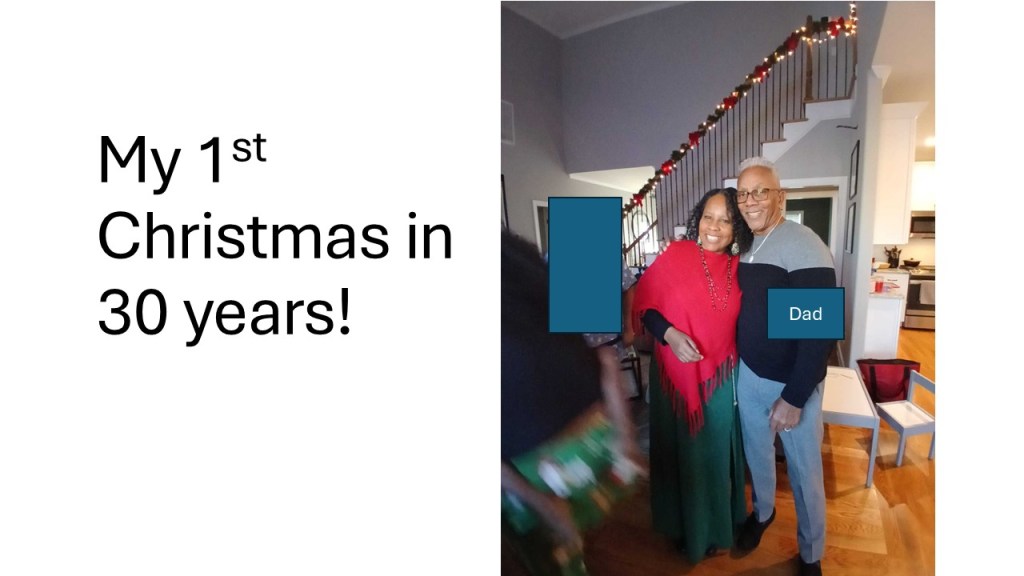
This weekend, I had a breakthrough—one that quietly unfolded over music, laughter, and the scent of homemade brunch.

My siblings and I spent Father’s Day weekend with our dad. We didn’t go out or make big plans. We stayed in, talked, cooked, played music, danced around the house, and watched movies. It was beautiful, intimate, and simple.

The next day, while sitting by the lake and reflecting on the weekend, something incredible happened.

I started praying for my father.

That might sound normal, even obvious, to some. But for me, it was a radical, healing moment. It was the first time I had ever done it. I prayed for his health. I prayed for the longevity of his life. I prayed with genuine love in my heart—and I was overcome. I wept tears of joy and gratitude.

Because for most of my adult life, I believed I wasn’t allowed to.


Undoing False Teaching: When Love Was Forbidden

I spent 27 years as a strict Salafi Muslim. For those unfamiliar, Salafism is a conservative and deeply literalist interpretation of Islam, closely aligned with the scholars of Saudi Arabia. One of its foundational principles is al-walaa wal-baraa—a doctrine that teaches loyalty and allegiance to fellow Muslims and disassociation or even hostility toward non-Muslims.

In practice, this means you’re taught to love and support those who follow your faith, and to emotionally distance yourself—or even hate—those who don’t.

Yes, including your parents.

Yes, including your Christian dad on Father’s Day.

As a young student, I memorized verses like these:

“O believers! Do not take Jews and Christians as allies. They are allies of one another…” (Qur’an 5:51)

“You will not find a people who believe in Allah and the Last Day loving those who oppose Allah and His Messenger, even if they were their fathers or sons or brothers…” (Qur’an 58:22)

“And the Jews will never be pleased with you, nor the Christians, until you follow their religion.” (Qur’an 2:120)

These verses were drilled into us in context that made their interpretation clear: love is reserved for believers. Anyone outside of Islam—especially Jews and Christians—are either your adversaries or your mission field.


When Hatred Was Framed as Holiness

As a student in Cairo, I remember eagerly listening to cassette tapes from popular Salafi scholars. One tape by Sheikh Muhammad …. was a fiery response to a controversial cartoon of the Prophet Muhammad. The title was chilling: “No—They Are the Pigs and Swine.” It referenced a Qur’anic story where a group of Jews were transformed into monkeys and pigs as punishment.

This kind of rhetoric was widespread in the circles I moved in. In Saudi Arabia, I studied under female students of well-known Salafi scholars like Sheikh U…. I remember clearly one study circle where we discussed how to treat non-Muslim relatives. I asked what felt like a very personal question:

“But what about our parents? Can we love them?”

The answer was unwavering: No.

You could show them kindness. You could be polite. But love? That was reserved only for the believers.

The only acceptable prayer for them was a plea for their conversion to Islam. Nothing else.

I remember one of my Arab friends asking me one time, “Your father’s not Muslim yet?” I said, “no,” feeling ashamed. “You are not making dua/praying for him.” she scolded me.


The Lie Unraveled

Today, I see things differently.

No longer do I believe in a God who commands me to suppress love, especially for the people who raised me, nurtured me, and celebrated me. My father is still a devout Christian. And I’m not praying for him to become something else. I’m praying for his heart, his peace, his strength, and his joy.

And I feel no shame in doing that.

In fact, I feel free.


A Message to My Former Self—and Others Like Me

To the younger version of me who thought loving her family meant betraying her faith—I’m so sorry. You deserved better theology.

To those who are still wrestling with fear and guilt because of the things you were taught in the name of God—keep wrestling. God can handle your questions.

And to my father—thank you. Thank you for being constant. Thank you for your love. Thank you for always seeing me, even when I was taught not to see you fully.

This Father’s Day, I didn’t just celebrate you. I reclaimed you.

And that is the real breakthrough.

Love, Nela

nelajaye@gmail.com

Cultivating Joy: A Guide to Rejoicing Daily

Jun 8, 2025, 5:00 am

 This is the day which the Lord hath made; we will rejoice and be glad in it. Psalm 118:24 

Very simple, very profound.  

To rejoice is to experience and express profound joy and happiness. It involves being deeply pleased and celebrating the good things in life. Rejoicing in the Lord involves acknowledging God’s grace and presence in your life, even in difficult times. There are many ways to express joy in the body and this has numerous health benefits. Though every religion has sacred days dedicated to celebration, expressions of joy need not be limited to one specific day.

Faith Meets Emotion: A Divine Pairing

The verse in Psalm 118:24 contains two truths: first, that God is the creator of each day (a statement of faith), and second, that we are invited to respond to that creation with joy (an emotional expression).

Coming from Islam to Christianity, this idea of being joyful is still new to me. In my previous religious practice, there was much concern about the legalities of doing the right things in the right way, at the right times. Awe and fear were most important feelings to have towards God and the worship of Him. However, to follow Christ is to embrace a love and grace-based faith where emotional expression—rejoicing—is not only allowed but encouraged.

When the last chains of my spiritual shame were broken…I cried…hard! I wept from a place inside me I didn’t know about. I wept in the crevices where there were spider webs on old pain and its lies. And after a good hard minute or 2 of weeping, something strange happened…I laughed. I laughed so hard, and I jumped! and I shouted! I shouted, “This is the best night ever!!!” Kind of corny but the truth. I rejoiced that my guilt and shame had truly been cast away! The lightness I felt is

Ultimately, spiritual and emotional health go hand in hand. Rejoicing is an emotional act, yes, but also a spiritual one. The more we celebrate God’s grace, the more we open ourselves to healing. This union of spirit and emotion is not new. It echoes across scriptures and sacred traditions. Psalm 98 invites creation itself—the rivers, the mountains—to rejoice. Joy, then, is not only human but cosmic.

Why rejoice?

The Sacred Power of Rejoicing on Emotional, Spiritual, and Physical Health

Someone might say, “Why should I rejoice when life is so bad?” The focus on negative aspects of life can begin a cycle of discontent. A person may cite a myriad reasons—ranging from economic instability to personal failures—that justify their unhappiness. This mindset not only diminishes one’s quality of life but also contradicts the biblical exhortation found in Philippians 4:4: “Rejoice in the Lord always; again I will say, rejoice!” The call to rejoice serves as a reminder that emotional and spiritual health are interconnected; neglecting one invariably affects the other

Rejoicing in the Lord means finding joy and delight in God, not just in fleeting emotions, but in a deeper, more profound state of joy rooted in your relationship with Him and His love. It’s a choice to focus on God’s goodness and blessings, even when facing difficulties, and to trust in His promises and plan.  Rejoicing strengthens your faith, offers hope and stabilitiy, and is a way to emulate Jesus.

Joy has been scientifically linked to numerous health benefits, impacting both physical and mental well-being. It can lead to improved cardiovascular health, reduced stress, and even a strengthened immune system. Moreover, experiencing joy can enhance mental resilience and improve sleep quality.  Joy enhances mental well-being, improves memory, and increases creativity.

What does rejoicing look like?

Rejoicing in Practice: Tools for Embodied Joy

Rejoicing is not always spontaneous. Sometimes, it must be practiced, cultivated, even scheduled. I want to provide a simple and profound toolkit for doing just that: These practices are not tied to one religion—they are universal expressions of humanity. I would challenge readers of all faiths (or none) to ask themselves: What does rejoicing look like for you? What makes you want to rejoice? Laugh? But right now, let’s just rejoice. I would love for you to rejoice with me! How are we going to rejoice?

  • We’re going to shout! – Releasing vocal energy frees the nervous system and stirs confidence.
  • We’re going to dance, jump, and stomp! – Moving to rhythm creates joy in the body and connects people to cultural roots.
  • We’re going to laugh until we cry!
  • We’re going to sing songs of Victory! Music lifts the soul, whether it’s gospel, African spirituals, or a handpan melody.
  • We’re going to clap – applauding the goodness of God
  • We’re going to raise our arms and hands to the heavens – viscerally surrendering our will to the Almighty and opening up a divine portal,k ready to receive

Psalm 98:8 says: “Let the rivers clap their hands, Let the mountains sing together for joy.”

”Oh clap your hands, all ye peoples; Shout unto God with the voice of triumph. Psalms 47:1

Journal Entry

Have a journal, 2 good pens, a highlighter. and a Bible; whether digital or in text. These are the tools that you need. 

  • Focus on God’s grace: Acknowledge His presence in your life and His unwavering love. 
  • Pray and meditate: Engage in prayer to strengthen your faith and find peace in God’s love. 
  • Find joy in service: Help others and give back to your community, finding joy in making a difference. 
  • Journal with Intention – Writing down blessings, thoughts, or prayers makes internal joy visible.
  • Meditate on Scripture – Let verses like Psalm 47:1 and Psalm 98:8 shape the language of praise: “Oh clap your hands, all ye peoples… Let the rivers clap their hands.”

What does rejoicing look or sound like for you? When was the last time you allowed yourself to fully rejoice, no matter your circumstances?

Share you thoughts, reflections, or discoveries by email or in the comments.

I will be talking to you soon!

Nela

nelajaye@gmail.com

Morning Message: Transformation, Grief, and Grace

“Weeping may endure for a night, but joy comes in the morning.” — Psalm 30:5

Good morning. This is Nela, and this is your morning message. I love these moments in the morning because when I wake up, I feel renewed. I feel refreshed. And before we go further, I want to gently let you know—I will speak about Jesus Christ in this message, because that’s where my healing and transformation live.

Yesterday, I had a deeply emotional moment. I was reflecting on my old religious community—my friends, my former students, my mentors—people I genuinely loved and who loved me for many years. When news of my conversion spread, their response was sorrowful, even accusatory. They said, “You mocked us. You attacked our beliefs.”

To be honest, I was shocked. That’s not how I saw it. I wasn’t attacking—I was just telling my story. And my story is wrapped up in Islam, what I learned from it, and how I experienced it. But it also includes something new: my transformation through Christ.

In that moment of accusation, I began to question myself: Am I a terrible person? Am I cold-hearted for not feeling the pain they feel? I couldn’t find an open appointment with my therapist, so instead, I brought it to the Holy Spirit and surrendered it in prayer. I went to sleep, and in the morning—it was clear.

“Weeping may endure for a night, but joy comes in the morning.”

For months, I had lived in a space between two identities: the Muslim woman dressed in black, teaching Quran and Arabic—and the woman I am now: a daughter of Christ, reborn. The Holy Spirit revealed to me that the old has passed away. I am fully transformed. The woman they remember no longer exists! I am made new! My only job now is to keep walking with Christ and keep trusting Him in order to fulfill my purpose and reap the reward of what he promised:

I came that you have life and have it more abundantly.

I am in awe that this is real. I am in awe that even though the Bible has been changed over the centuries, it still has the power to reach a broken person like me in 2025 and completely transform my life.

I want to read to you from the Gospel of John. This is really what my channel and my message are about—healing and recovery from trauma through the transformation that comes in Christ.

From John 10:22–30, Jesus says:

“My sheep listen to my voice; I know them, and they follow me. I give them eternal life, and they shall never perish; no one will snatch them out of my hand… I and the Father are one.”

That passage moved me deeply. I now understand what it means to be one of His sheep—called, known, protected. I’ve been diving into the Gospel of John because it gives such a vivid, beautiful account of Jesus’ life—His miracles, His words, His truth.

What I didn’t know until recently is that when you study the Word not just for knowledge but to know God, to know Jesus, something miraculous happens: it becomes part of your spirit. The Bible is the living Word. Jesus said, I am the Living Water, the Bread of Life. Even with all the human edits and history, it still carries the divine spark. It still changes people. It changed me.


🌄 Final Thoughts for This Morning

If you’re in a place of pain, confusion, or transition, I want to remind you—you’re not alone. Identity shifts can bring grief, and grief can bring self-doubt. But healing is possible. Joy does come in the morning.

Stay close to the light. Stay curious. And know that transformation doesn’t mean betraying the past—it means answering a deeper call to who you’re becoming.


Blessings on your morning, your walk, and your voice.

Take care,

Nela

  1. Nela Jaye's avatar
  2. thestrivingmuslm's avatar

Good morning Message,

Time to pull out your journal…

Good morning.

This is Nela. I’m so glad you decided to join me on Nela’s Nest dot blog. I want to ask you a question. If you’re here and you’re searching, if you’re searching for answers, if you’re searching for peace, if you’re searching for clarity after confusion. (0:33) When I see this question, are you carrying guilt and shame? You know, I spoke with a woman from a global organization. She works with ex-Muslims from all around the world, from Iran, Iraq, Afghanistan, Saudi Arabia, Egypt.   I myself have listened to ex-Muslim stories from, you know, U.S. other places. And there’s one thing that keeps coming up in these conversations. And that is guilt and shame. (1:16) Guilt says that I have done something wrong. Shame says that I am something wrong. Both of these are very toxic to our spiritual and emotional health. Now, what happens to a lot of Muslims while they may have good intentions in trying their best to practice the religion of Islam? (1:45) They find that they don’t meet the mark. And not meeting the mark might be, you know, missing prayers or missing fast, for example, or not wearing hijab or maybe falling into something that is considered forbidden.(2:09) Whatever the case may be, what happens, the cycle of the guilt and shame is that the person feels guilty for not doing or for doing wrong. (2:24) That’s number one. Then number two, they have to conceal it.They can’t share it with their friend that, you know what? I don’t want to fast Ramadan tomorrow. I don’t feel like fasting. (2:38) Or can I just fast, you know, a week out of Ramadan or do I have to do the whole 30 days? Or, you know what, I never made up my fast.  I’m so bad. I’m such a bad Muslim, such a bad person. There’s something wrong with me. So I can easily go from guilt straight to shame by first convicting myself for not doing. (3:05) And then proclaiming that inside of myself, and all this is going on inside of my own heart and my own mind, proclaiming that there’s something wrong with me. (3:17) And that’s the shame.And then the longer I keep it secret and try to cover it up, like a lot of Muslim youth are doing, the deeper the guilt and the shame becomes. (3:38) And now the tragedy of that is that my perception of what God thinks of me is all distorted. There are Muslims who think that God doesn’t love them.(3:58) God has cursed them. God is punishing them. They don’t know if God forgives them.And this is very, very trying on a human soul. (4:15) And so this space here is meant to be a space of healing. And so in a space of healing, there are certain things that have to be rooted out, certain things that cannot be present.(4:32) One of them is guilt. Another one is shame. Another one is blame.. So how do you feel about your relationship with God? (4:48) Do you feel that you are valuable to him? Do you feel that he loves you? Do you feel that you are loved? Do you feel that you are supported? (4:56) Do you believe that you’re worthy of God’s love? What are your thoughts, feelings around your relationship with God? (5:11) So I want to challenge you this morning. If you’re willing, if you are willing to journal and write down, really what’s in your mind, really what’s in your heart. (5:27) Because I can almost guarantee you, someone else feels the same way. Sometimes we feel like we’re alone. Like I’m the only one who feels like this. (5:39) I’m the only one who’s struggling with this. But that’s a trick of the enemy to keep you isolated. And the more isolated you feel, the longer it might take for you to heal. (6:00) So this was just a short message this morning.I hope this will benefit you. And pretty soon I will hold a very confidential private Zoom meeting for us to get together. (6:16) And discuss these things.

Take care. Peace.

Nela

I Have Heard Your Reactions

Dear Friends,

Good evening. This is Nela.

I want to acknowledge that my recent interview has been both shocking and deeply painful for many Muslims who knew me. I’ve heard your feedback, and I want you to know that I receive it with humility.

What I shared came from a place of deep personal struggle—a crisis of faith that was agonizing and transformative. It’s an excruciating grief I would not wish on anyone. The joy I expressed was not aimed at mocking Muslims, but at celebrating the freedom I’ve found after years of spiritual confusion. Only a few months ago, I could not have spoken about these things without bitter tears.

I wish I could have spared you the hurt of hearing the news. But you should know that my faith transition has happened over the course of 3 years. and no one is more shocked about it than me. I did not ask for this or plan it. I’m still fascinated and astonished at this whole spiritual journey myself.

Though I consistently participate in healing work, I will own that there are areas of my spirit where I am still releasing anger and disillusionment. There may be moments when these residual emotions leak out, masked by sarcasm.

And I take full accountability for what I say and how I say it.

I understand that Muslims are listening, and intend to be mindful of how I speak moving forward.

This is my story—my truth. My goal is never to cause harm, but to bear witness to the journey God is guiding me through.

My platform, Nela’s Nest, is a space carefully created for women of all faiths. This is not meant to be a forum for argument or hostile debate though thoughtful and healthy discourse is welcome. Our ultimate mission is clear: to assist women in the deep and sacred work of healing and recovery from emotional and spiritual trauma.

The topic; Perspectives on Islam is only a pretense for my platform — the gateway into my own journey of healing. It was through this deeply personal process of examining Islam, allowing myself to ask questions and face my doubts, that my eyes were opened.

I will share what God has revealed to me through His Living Word — about Islam and the Abrahamic faiths more broadly. Once all questions, doubts, and insights have found their voice — we will move into a powerful spiritual transition: rebuking falsehood and replacing it with truth.

After this foundational work is complete, we can then fully engage with the heart of this platform:
Healing and Recovery from Trauma — A Wise Woman’s Toolbox.

Thank you to everyone who has reached out, challenged me, or simply listened.

With respect and sincerity,
Nela

formerly known as ‘Nadiya’

Islam to Christianity: Isn’t That Going Backwards?

No! Islam went back to the Law of Moses

(read until the end)

One of my Muslim friends said to me, “That’s going backwards.” And 4 years earlier, I would have said the same. But currently, while studying the Gospel of John, I am seeing this from a much different perspective. I am seeing how Islam actually took us back to the Mosaic Law, which was so impossible to fulfill:

Commands Difficult to Fulfill

For a practicing Muslim, prayer is 5 times a day. In preparation for prayer there are conditions to be fulfilled:

  • Ablution/washing
  • The prayer’s time must be in
  • A clean place
  • Clean clothing
  • Facing Mecca

So, let us say I have just washed perfectly, dressed, placed my mat facing Mecca, no dog hair or saliva has touched the area. Now, I am ready to pray but I pass gas, i.e. fart. Passing gas negates the ablution and I must do it all again.

In the month of Ramadan, the month of fasting, the fast begins at the break of dawn and ends at sunset. A woman could have fasted the entire day, but if her menstruation comes an hour before sunset, she must fast the entire day again. It will not ‘count’.

If one breaks their fast without an excuse there is also a severe punishment. I remember in Madinah, I was in the car with my 1st husband and one of his fellow students of knowledge. It was so weird, in Madinah when our husbands stayed out late, they were not at clubs or bars meeting women – they were with Sheikhs learning the religion. Anyway, a man had come to a big Sheikh and asked: ” Sheikh, my wife and I got married during Ramadan (why would they do that?) and we broke our fast every day for 12 days. (i.e. they had intimate relations).” The Sheikh answered his question this way: “For EACH of the 12 days, you owe 30 more. AND if your wife had sex with you willingly, then she owes the same.” I remember my mouth dropping open underneath my veil. “Damn!” I thought. I had read about the ‘kafara’ but reading about it was one thing. This is what I mean by commandments/laws that are difficult to fulfill. This was the situation of the Pharisees that Jesus encountered.

Dietary Laws

The dietary laws of Islam are also similar to that of the Jewish law.

 "He has only forbidden to you dead animals, blood, the flesh of swine, and that which has been dedicated to other than Allah..."

Al-Baqarah (2:173

I remember visiting my grandmother when she was alive, and being particular about the dishes and pots which had been used for pork. My grandmother said, ‘Oh you all are like the Jews.’ I was completely offended. (see the article Spiritual Hatred of Jews.)

Other than pork, there are other animals forbidden to eat in Islam. Predatory animals, animals which live in and out of water, scavenger animals such as crabs, and predatory animals having fangs or talons.

Lambs to Slaughter

First, in chapter 1, John the Baptist introduces Jesus by saying, “Behold the Lamb of God”. The Jews understood the significance of the lamb, an animal of sacrifice. The Muslims understand it too. When a Muslim couple marry, they slaughter a lamb called a Waleemah, and invite family and friends to eat the meat and share in the occasion. When that couple has a child, again they slaughter; 1 lamb for a girl and 2 for a boy. This is called Aqeeqah. They then share the meat with family and friends. When Muslims travel to Mecca for Hajj, pilgrimage, they are also obligated to slaughter either a lamb or another particular animal. I know this all too well! When my 1st husband and I made Hajj, we could not afford to slaughter, so we were obligated to fast for 10 days. During the Eid of sacrifice, those Muslims who did not travel to Mecca, are also encouraged to sacrifice/slaughter a lamb or similar animal in remembrance and celebration.

Threats & Harsh Punishments

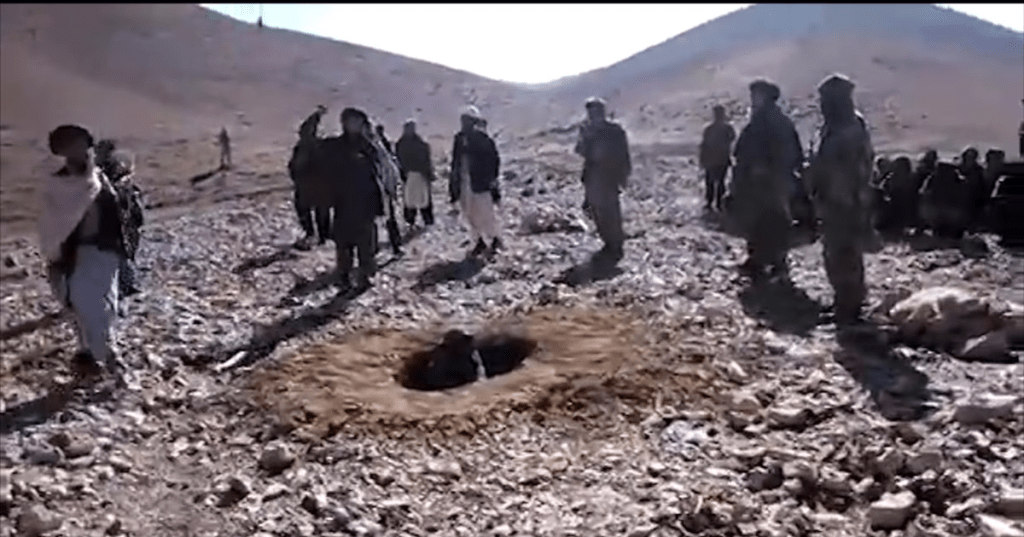
Reading Chapter 8 was something i did not expect. the pharisees bring before Jesus, a woman who was ‘caught in adultery’. The Mosaic Law said to stone her to death, but Jesus showed them a new perspective. Let he who is without sin throw the first stone!

Indeed, the Islamic Sharia punishment is stoning to death of the adulterer, though this is not practiced in most places today.

This still image from a horrifying video, shows a woman accused of adultery, down in a hole being pounded in the head with large stones in Afghanistan. This was in the year 2020!! (I do not advise watching the video.) In authentic Prophetic hadith;

(Muhamad) Allah’s Messenger (ﷺ) awarded the punishment of stoning to death (to the married adulterer and adulteress) and, after him, we also awarded the punishment of stoning, I am afraid that with the lapse of time, the people (may forget it) and may say: We do not find the punishment of stoning in the Book of Allah, and thus go astray by abandoning this duty prescribed by Allah. Stoning is a duty laid down in Allah’s Book for married men and women who commit adultery when proof is established, or if there is pregnancy, or a confession.

Sahih Muslim 1691a; Book 29, Hadith 21

It is understandable now why the Quran negates the crucifixion and the resurrection! Without them, we WOULD still be trying to fulfill the Laws of Moses.

Between Guilt and Arrogance

Jesus told the Pharisees that they knew the Law but they did not know God. Their hearts were dead.I was similar to them. Myself and my friends were so high on our horses. We were better and smarter than Jews, Christians, and even other Muslims. We knew the Law.

In the shadows of this arrogance, was shame and guilt. In Islam, When one truly humbled their heart to Allah, they found guilt, shame, or fear. If I missed a prayer and didn’t make it up, there was guilt. If I didn’t make up fasts or got weak during a fast and broke it, there was guilt. Wondering if I was ever forgiven or if my deeds were ‘accepted’. After prayers and at the end of Ramadan, Muslims say to each other, ‘may Allah accept it from us.‘ I never knew if I was good enough or if I was forgiven. And I always thought it was just me until later when I met so many others who had experienced the same thing.

Later on, I would like to discuss atonement and the idea of redemption and the difference in views between the religions. This is enough for now.

Nela

Blog at WordPress.com.

Up ↑