A Sanctuary for Trauma Healing, Not a Spotlight on Me
What brought me here is not why I am here.
Yes, it was trauma—religious trauma, emotional trauma, and the collapse of everything I thought was true—that pushed me into the healing process. My story includes an emotional breakdown in 2018, a faith crisis the following year, and the slow, agonizing unraveling of a belief system I had committed to for more than 25 years. Those experiences shook me awake. They forced me to confront the gap between what I believed and what I truly knew in my soul.
But make no mistake: that is not why Nela’s Nest exists.
My personal story is simply the doorway. It is not the destination.
I share pieces of my journey—my years in the Middle East, my deconstruction process, the grief I carried, and the truths I uncovered—not to center myself, but to create connection. I offer my experience as a bridge so others don’t feel alone as they walk their own difficult path toward healing.
Because the real mission of Nela’s Nest is this:
🌿 To support the healing and recovery of those who carry childhood trauma, spiritual trauma, or both.
What I learned on my own journey is something I never expected: The religious and spiritual wounds I suffered did not begin with religion. They were rooted in my childhood.
Unmet needs. Silent pain. Confusion that had no language. A longing to belong. Fear of disappointing people who held power over me.
These early wounds laid the foundation for later spiritual trauma. They created vulnerabilities—openings—through which harmful teachings, rigid systems, and fear-based doctrines took hold.
When I finally began untangling my religious trauma, I found the deeper root beneath it. And that changed everything.
🌱 Healing, I discovered, is an inside-out process.
You cannot heal religious trauma without addressing the childhood patterns that allowed it to shape you. You cannot reclaim your spiritual life without understanding the emotional life that lived beneath it. You cannot build a new identity without honoring the parts of you that were silenced, ignored, or conditioned to accept harm.
Nela’s Nest was created to support you through this entire journey.
This is a space for:
asking questions without fear
understanding the connection between childhood wounds and spiritual patterns
learning how trauma shapes the way we believe, trust, love, and relate
rebuilding a sense of self rooted in truth, not fear
finding compassion for the parts of you that had to survive
I am here not as a guru, not as a religious authority, and not as the center of the story— but as a fellow traveler who learned how to climb out of a deep, dark place and now extends a hand to help others find their way too.
Welcome to the Nest. This is your sanctuary. This is your soft place to land. This is where healing begins.
This weekend, I had a breakthrough—one that quietly unfolded over music, laughter, and the scent of homemade brunch.
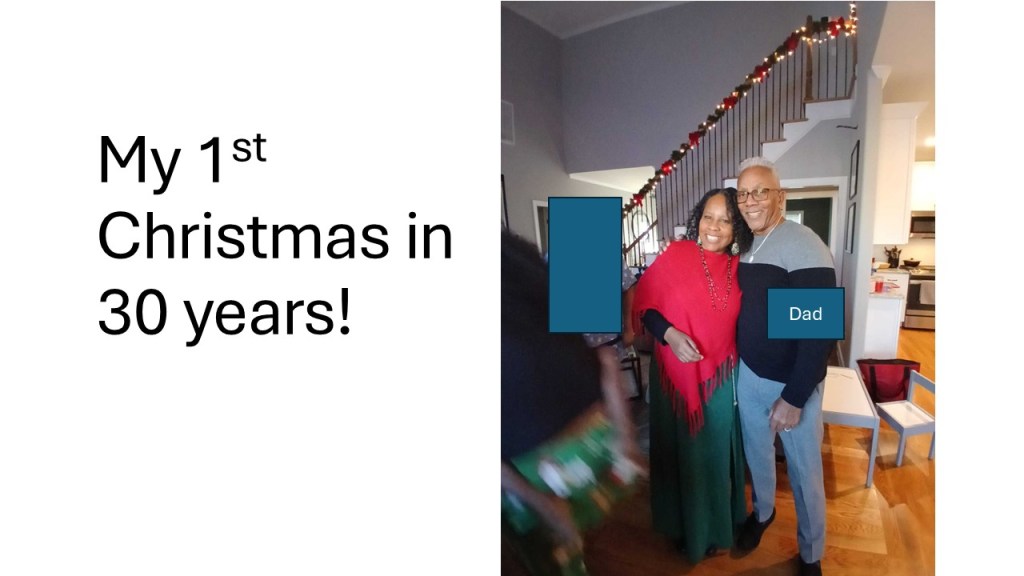
My siblings and I spent Father’s Day weekend with our dad. We didn’t go out or make big plans. We stayed in, talked, cooked, played music, danced around the house, and watched movies. It was beautiful, intimate, and simple.
The next day, while sitting by the lake and reflecting on the weekend, something incredible happened.
I started praying for my father.
That might sound normal, even obvious, to some. But for me, it was a radical, healing moment. It was the first time I had ever done it. I prayed for his health. I prayed for the longevity of his life. I prayed with genuine love in my heart—and I was overcome. I wept tears of joy and gratitude.
Because for most of my adult life, I believed I wasn’t allowed to.
Undoing False Teaching: When Love Was Forbidden
I spent 27 years as a strict Salafi Muslim. For those unfamiliar, Salafism is a conservative and deeply literalist interpretation of Islam, closely aligned with the scholars of Saudi Arabia. One of its foundational principles is al-walaa wal-baraa—a doctrine that teaches loyalty and allegiance to fellow Muslims and disassociation or even hostility toward non-Muslims.
In practice, this means you’re taught to love and support those who follow your faith, and to emotionally distance yourself—or even hate—those who don’t.
Yes, including your parents.
Yes, including your Christian dad on Father’s Day.
As a young student, I memorized verses like these:
“O believers! Do not take Jews and Christians as allies. They are allies of one another…” (Qur’an 5:51)
“You will not find a people who believe in Allah and the Last Day loving those who oppose Allah and His Messenger, even if they were their fathers or sons or brothers…” (Qur’an 58:22)
“And the Jews will never be pleased with you, nor the Christians, until you follow their religion.” (Qur’an 2:120)
These verses were drilled into us in context that made their interpretation clear: love is reserved for believers. Anyone outside of Islam—especially Jews and Christians—are either your adversaries or your mission field.
When Hatred Was Framed as Holiness
As a student in Cairo, I remember eagerly listening to cassette tapes from popular Salafi scholars. One tape by Sheikh Muhammad …. was a fiery response to a controversial cartoon of the Prophet Muhammad. The title was chilling: “No—They Are the Pigs and Swine.” It referenced a Qur’anic story where a group of Jews were transformed into monkeys and pigs as punishment.
This kind of rhetoric was widespread in the circles I moved in. In Saudi Arabia, I studied under female students of well-known Salafi scholars like Sheikh U…. I remember clearly one study circle where we discussed how to treat non-Muslim relatives. I asked what felt like a very personal question:
“But what about our parents? Can we love them?”
The answer was unwavering: No.
You could show them kindness. You could be polite. But love? That was reserved only for the believers.
The only acceptable prayer for them was a plea for their conversion to Islam. Nothing else.
I remember one of my Arab friends asking me one time, “Your father’s not Muslim yet?” I said, “no,” feeling ashamed. “You are not making dua/praying for him.” she scolded me.
The Lie Unraveled
Today, I see things differently.
No longer do I believe in a God who commands me to suppress love, especially for the people who raised me, nurtured me, and celebrated me. My father is still a devout Christian. And I’m not praying for him to become something else. I’m praying for his heart, his peace, his strength, and his joy.
And I feel no shame in doing that.
In fact, I feel free.
A Message to My Former Self—and Others Like Me
To the younger version of me who thought loving her family meant betraying her faith—I’m so sorry. You deserved better theology.
To those who are still wrestling with fear and guilt because of the things you were taught in the name of God—keep wrestling. God can handle your questions.
And to my father—thank you. Thank you for being constant. Thank you for your love. Thank you for always seeing me, even when I was taught not to see you fully.
This Father’s Day, I didn’t just celebrate you. I reclaimed you.
I want to acknowledge that my recent interview has been both shocking and deeply painful for many Muslims who knew me. I’ve heard your feedback, and I want you to know that I receive it with humility.
What I shared came from a place of deep personal struggle—a crisis of faith that was agonizing and transformative. It’s an excruciating grief I would not wish on anyone. The joy I expressed was not aimed at mocking Muslims, but at celebrating the freedom I’ve found after years of spiritual confusion. Only a few months ago, I could not have spoken about these things without bitter tears.
I wish I could have spared you the hurt of hearing the news. But you should know that my faith transition has happened over the course of 3 years. and no one is more shocked about it than me. I did not ask for this or plan it. I’m still fascinated and astonished at this whole spiritual journey myself.
Though I consistently participate in healing work, I will own that there are areas of my spirit where I am still releasing anger and disillusionment. There may be moments when these residual emotions leak out, masked by sarcasm.
And I take full accountability for what I say and how I say it.
I understand that Muslims are listening, and intend to be mindful of how I speak moving forward.
This is my story—my truth. My goal is never to cause harm, but to bear witness to the journey God is guiding me through.
My platform, Nela’s Nest, is a space carefully created for women of all faiths. This is not meant to be a forum for argument or hostile debate though thoughtful and healthy discourse is welcome. Our ultimate mission is clear: to assist women in the deep and sacred work of healing and recovery from emotional and spiritual trauma.
The topic; Perspectives on Islam is only a pretense for my platform — the gateway into my own journey of healing. It was through this deeply personal process of examining Islam, allowing myself to ask questions and face my doubts, that my eyes were opened.
I will share what God has revealed to me through His Living Word — about Islam and the Abrahamic faiths more broadly. Once all questions, doubts, and insights have found their voice — we will move into a powerful spiritual transition: rebuking falsehood and replacing it with truth.
After this foundational work is complete, we can then fully engage with the heart of this platform: Healing and Recovery from Trauma — A Wise Woman’s Toolbox.
Thank you to everyone who has reached out, challenged me, or simply listened.
One of my Muslim friends said to me, “That’s going backwards.” And 4 years earlier, I would have said the same. But currently, while studying the Gospel of John, I am seeing this from a much different perspective. I am seeing how Islam actually took us back to the Mosaic Law, which was so impossible to fulfill:
Commands Difficult to Fulfill
For a practicing Muslim, prayer is 5 times a day. In preparation for prayer there are conditions to be fulfilled:
Ablution/washing
The prayer’s time must be in
A clean place
Clean clothing
Facing Mecca
So, let us say I have just washed perfectly, dressed, placed my mat facing Mecca, no dog hair or saliva has touched the area. Now, I am ready to pray but I pass gas, i.e. fart. Passing gas negates the ablution and I must do it all again.
In the month of Ramadan, the month of fasting, the fast begins at the break of dawn and ends at sunset. A woman could have fasted the entire day, but if her menstruation comes an hour before sunset, she must fast the entire day again. It will not ‘count’.
If one breaks their fast without an excuse there is also a severe punishment. I remember in Madinah, I was in the car with my 1st husband and one of his fellow students of knowledge. It was so weird, in Madinah when our husbands stayed out late, they were not at clubs or bars meeting women – they were with Sheikhs learning the religion. Anyway, a man had come to a big Sheikh and asked: ” Sheikh, my wife and I got married during Ramadan (why would they do that?) and we broke our fast every day for 12 days. (i.e. they had intimate relations).” The Sheikh answered his question this way: “For EACH of the 12 days, you owe 30 more. AND if your wife had sex with you willingly, then she owes the same.” I remember my mouth dropping open underneath my veil. “Damn!” I thought. I had read about the ‘kafara’ but reading about it was one thing. This is what I mean by commandments/laws that are difficult to fulfill. This was the situation of the Pharisees that Jesus encountered.
Dietary Laws
The dietary laws of Islam are also similar to that of the Jewish law.
"He has only forbidden to you dead animals, blood, the flesh of swine, and that which has been dedicated to other than Allah..."
Al-Baqarah (2:173
I remember visiting my grandmother when she was alive, and being particular about the dishes and pots which had been used for pork. My grandmother said, ‘Oh you all are like the Jews.’ I was completely offended. (see the article Spiritual Hatred of Jews.)
Other than pork, there are other animals forbidden to eat in Islam. Predatory animals, animals which live in and out of water, scavenger animals such as crabs, and predatory animals having fangs or talons.
Lambs to Slaughter
First, in chapter 1, John the Baptist introduces Jesus by saying, “Behold the Lamb of God”. The Jews understood the significance of the lamb, an animal of sacrifice. The Muslims understand it too. When a Muslim couple marry, they slaughter a lamb called a Waleemah, and invite family and friends to eat the meat and share in the occasion. When that couple has a child, again they slaughter; 1 lamb for a girl and 2 for a boy. This is called Aqeeqah. They then share the meat with family and friends. When Muslims travel to Mecca for Hajj, pilgrimage, they are also obligated to slaughter either a lamb or another particular animal. I know this all too well! When my 1st husband and I made Hajj, we could not afford to slaughter, so we were obligated to fast for 10 days. During the Eid of sacrifice, those Muslims who did not travel to Mecca, are also encouraged to sacrifice/slaughter a lamb or similar animal in remembrance and celebration.
Threats & Harsh Punishments
Reading Chapter 8 was something i did not expect. the pharisees bring before Jesus, a woman who was ‘caught in adultery’. The Mosaic Law said to stone her to death, but Jesus showed them a new perspective. Let he who is without sin throw the first stone!
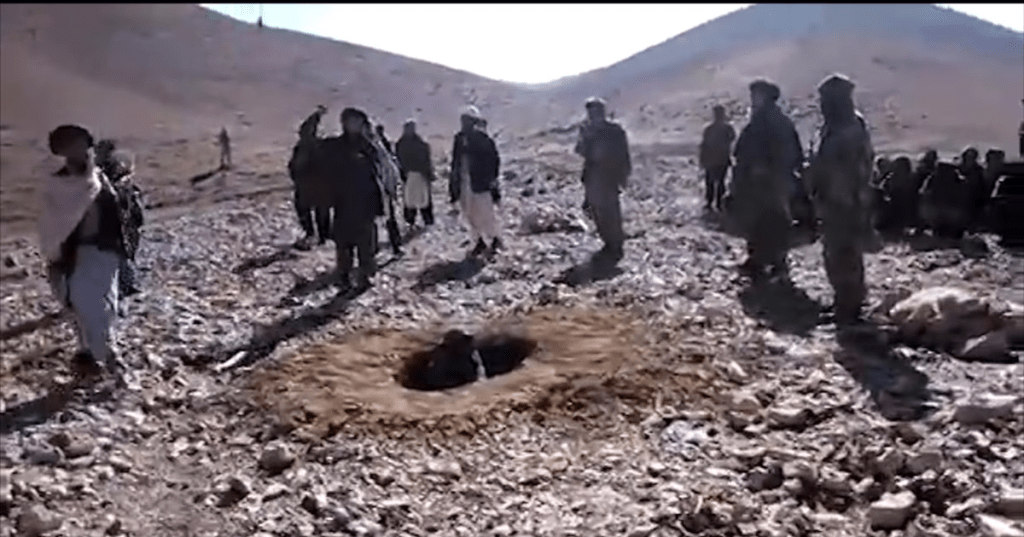
Indeed, the Islamic Sharia punishment is stoning to death of the adulterer, though this is not practiced in most places today.
This still image from a horrifying video, shows a woman accused of adultery, down in a hole being pounded in the head with large stones in Afghanistan. This was in the year 2020!! (I do not advise watching the video.) In authentic Prophetic hadith;
(Muhamad) Allah’s Messenger (ﷺ) awarded the punishment of stoning to death (to the married adulterer and adulteress) and, after him, we also awarded the punishment of stoning, I am afraid that with the lapse of time, the people (may forget it) and may say: We do not find the punishment of stoning in the Book of Allah, and thus go astray by abandoning this duty prescribed by Allah. Stoning is a duty laid down in Allah’s Book for married men and women who commit adultery when proof is established, or if there is pregnancy, or a confession.
Sahih Muslim 1691a; Book 29, Hadith 21
It is understandable now why the Quran negates the crucifixion and the resurrection! Without them, we WOULD still be trying to fulfill the Laws of Moses.
Between Guilt and Arrogance
Jesus told the Pharisees that they knew the Law but they did not know God. Their hearts were dead.I was similar to them. Myself and my friends were so high on our horses. We were better and smarter than Jews, Christians, and even other Muslims. We knew the Law.
In the shadows of this arrogance, was shame and guilt. In Islam, When one truly humbled their heart to Allah, they found guilt, shame, or fear. If I missed a prayer and didn’t make it up, there was guilt. If I didn’t make up fasts or got weak during a fast and broke it, there was guilt. Wondering if I was ever forgiven or if my deeds were ‘accepted’. After prayers and at the end of Ramadan, Muslims say to each other, ‘may Allah accept it from us.‘ I never knew if I was good enough or if I was forgiven. And I always thought it was just me until later when I met so many others who had experienced the same thing.
Later on, I would like to discuss atonement and the idea of redemption and the difference in views between the religions. This is enough for now.



 Nela's Nest